How Wildfire Season Leads to Dust Buildup: Air Duct Cleaning for SLC Homes
If your Salt Lake home feels extra dusty by late summer, your ducts are probably part of the story. Every time smoke rolls into the valley, fine particles ride in and settle inside your ductwork, then get pushed back out every time the air kicks on.
So here is the short answer: yes, wildfire season really can lead to noticeable dust buildup in your ducts, and a professional air duct cleaning is one of the better ways to clear it out. That fine ash and dust does not just vanish. It collects in the parts of your system you never see.
Salt Lake sits in a bowl. The Wasatch and Oquirrh mountains ring the valley, and the same geography that traps winter inversions also holds onto summer wildfire smoke.
That haze can settle over the Salt Lake area for days at a time. Your home breathes that air right along with you.
Let's walk through what actually happens inside your system, why it matters, and what a real cleaning looks like.
Why Wildfire Smoke Ends Up in Your Ducts
Wildfire smoke is loaded with tiny particles, much smaller than the everyday dust you can see floating in a sunbeam. These particles slip through gaps around windows and doors. They also get pulled in through your air handler every time the system runs.
Once inside, your ductwork acts like a set of lungs for the house. Air gets pulled in, moved across the heat exchanger, and pushed back out through the supply registers in each room. Fine dust hitches a ride on that air and starts to coat the inside walls of the ducts.
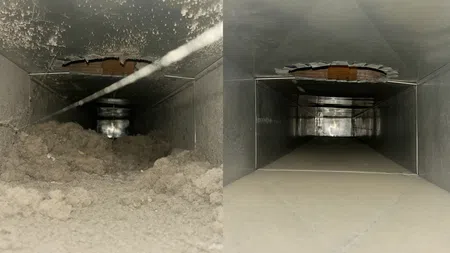
Over a smoky season, that thin coating adds up. It builds on the flexible duct runs, around the register boots, and near the grilles and vent covers where air enters each room. The more it collects, the more gets stirred back into your living space.
Signs the Buildup Is Getting Ahead of You
You do not need special tools to notice the early clues. Your home usually tells you.
- Dust settles on shelves and tables again a day or two after cleaning
- The air feels stuffy even with the system running
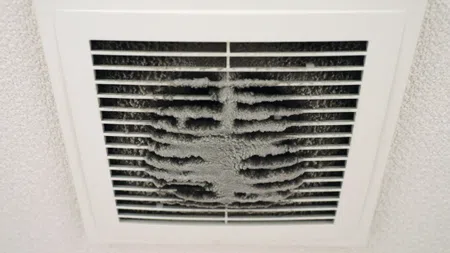
- You spot gray fuzz around your supply registers or vent covers
- Airflow from certain rooms feels weaker than it used to
None of these are emergencies on their own. Together, though, they often point to dust buildup that has worked its way through the ductwork.
What Professional Air Duct Cleaning Actually Involves
A real cleaning is more than a shop vacuum at a few vents. Done right, it clears the whole system, from the supply registers all the way back to the air plenum near your air handling unit.
Here is the general flow of a professional job:
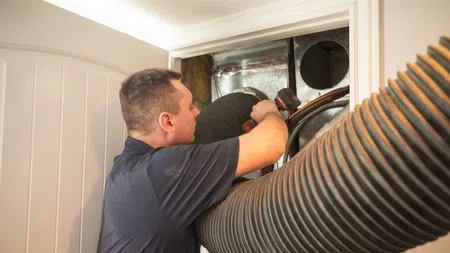
- The technician seals the system and creates negative pressure, so loosened dust gets pulled toward the collection equipment instead of blowing into your rooms
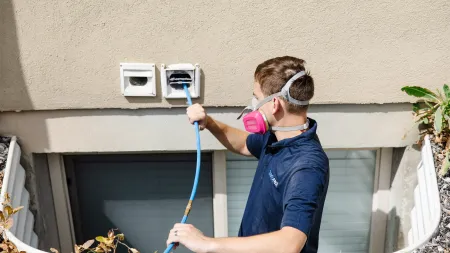
- Air whips and brushes agitate the inside walls of the ductwork, knocking debris loose from the flexible duct and the metal runs
- That debris travels through the ducts toward the vacuum, where it gets captured rather than scattered
- Grilles, vent covers, and register boots get attention too, since those are the spots you see and touch
A thorough crew also checks the parts near the air handler, like the drain pan and the area around the heat exchanger, where dust and grime tend to gather. The National Air Duct Cleaners Association, known as NADCA, sets the industry standard for how this work should be done. When a company follows the NADCA standard, you know the cleaning covers the full HVAC system and not just the parts near the openings.
This is where the Zerorez approach stands out. Our team works the whole system carefully, so the dust that came in during wildfire season actually leaves the building instead of just moving around.
How This Ties Into Your Filters and Airflow
Your air filters do a lot of quiet work, especially during smoky months. They catch a good share of incoming particles before those reach the ductwork. When smoke is heavy, filters load up faster and need changing more often.
But filters cannot catch everything, and they do nothing for dust that has already settled deep in the ducts. That is the gap a full cleaning fills. Clearing the buildup helps your airflow stay strong, since a coated duct and a clogged system make your equipment work harder than it should.
Cleaner ducts and fresh filters work as a team. One handles what is coming in, and the other clears what already made it through. Together they help keep the dust load down and the indoor air quality feeling fresher after a rough smoke season.
Why Timing Matters in Salt Lake
The Salt Lake area gets its worst smoke in mid to late summer, when fires across the West are most active. That means fall is often a smart window for a cleaning. You clear out a season's worth of settled dust before you close up the house and lean on your heating system all winter.
Waiting has a cost. Run your furnace all winter over a dusty system, and you keep recirculating that buildup for months. A cleaning between the smoky season and the cold season resets things at a natural break point.
If you want the deeper background on how ducts and vents work together, our Air Duct and Dryer Vent Cleaning Guide breaks it all down in plain language.
Frequently Asked Questions
How often should I clean my air ducts in Salt Lake?
For most SLC homes, every three to five years is a reasonable rhythm. If you live through heavy smoke seasons, run the system a lot, or have pets, the shorter end of that range makes sense.
Does wildfire smoke really affect my ductwork?
Yes. Wildfire smoke carries very fine particles that drift indoors and settle inside your ducts. Over a smoky stretch, that adds up to real dust buildup on the inside walls of the system.
Can I just change my air filters instead?
Fresh filters help a lot and you should change them often during smoke season. But filters do not clean dust that has already settled deep in the ductwork, so the two jobs solve different problems.
How do I know if my ducts need cleaning?
Watch for dust that returns quickly after cleaning, gray fuzz around your grilles and supply registers, weak airflow from some rooms, or a stuffy feeling in the house. Those clues often point to buildup.
What makes a duct cleaning professional versus basic?
A professional job follows the NADCA standard, uses negative pressure and air whips, and cleans the full system from the supply registers back to the air plenum. A basic job often just hits the openings and misses the rest.
Ready to Clear the Season's Dust?
Wildfire season leaves its mark on every home in the valley, and your ducts take more of it than you might think. A thorough air duct cleaning gets that settled dust out of the system so it stops circulating back through your rooms.
We would love to help you reset before the heating season kicks in. Learn more about our full range of services at Zerorez Salt Lake, then schedule your visit with us today and breathe a little easier this fall.